|
46ª Brigata Aerea
|
 |
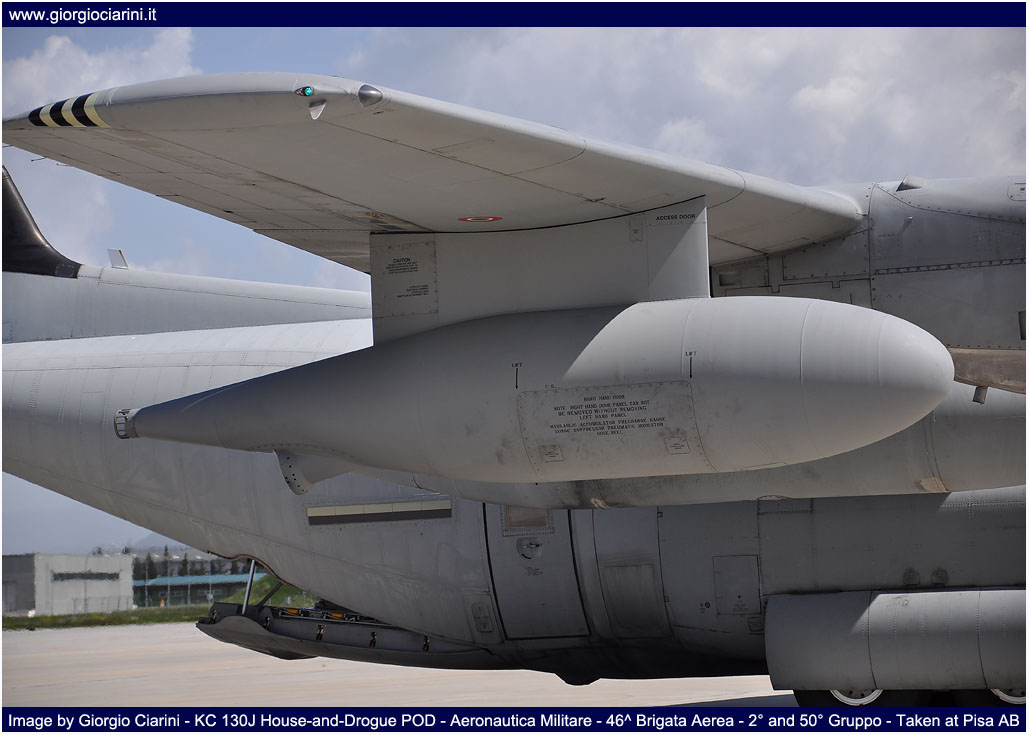
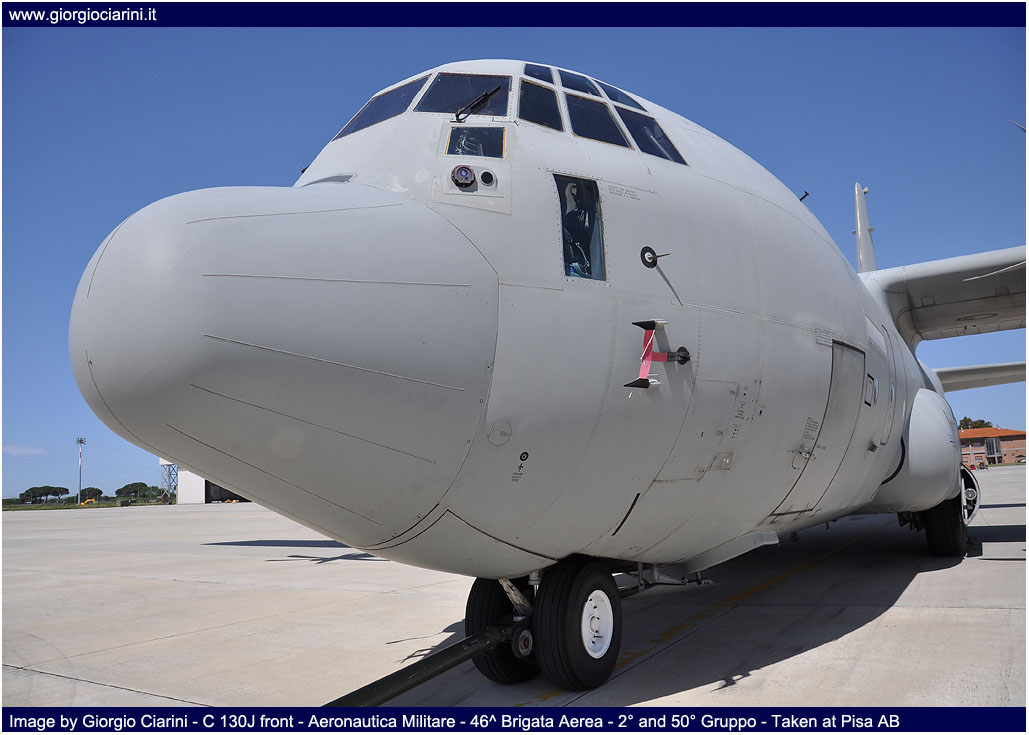
Il C 130J è l’ultima versione dell’Hercules, ad oggi l’unica in produzione dopo un epopea iniziata nel 1954 con il primo volo dell’YC-130, sfociata in oltre 40 versioni di 2.156 velivoli in servizio in 50 nazioni.
Il “nuovo” Hercules II o Super Hercules, nonostante sia all’apparenza estremamente simile al suo predecessore, è un velivolo molto diverso sotto svariati aspetti, incorpora lo “stato dell’arte” della tecnologia del 21° secolo, che supporta una riduzione:
della richiesta di risorse umane del 38%,
costi di supporto operativo del 35%,
costi dei cicli di vita del velivolo del 15%,
Le performance del C 130J, grazie soprattutto ai nuovi propulsori, permettono migliori e più veloci ratei di salita (8.500 mt in 14 minuti), una più alta velocità di crociera ed un più ampio raggio d’azione (4.500 km a 724 km/h.), migliorate anche le distanze di atterraggio e decollo (600 m).
I motori del “J” sono quattro Rolls Royce AE 2100 D3 che erogano una potenza di 3.425 KW con eliche Dowty R391 a sei pale, con profilo a scimitarra, costruite in materiale composito.
L’equipaggio è composto da due piloti ed un loadmaster, l’equipaggio di condotta ha a disposizione un’avionica completamente digitale, il cockpit è composto da quattro schermi multifunzione ed un HUD (Head-Up-Display) per ogni pilota; i vari sistemi digitali quali GPS/INS E-TCAS Ground/Digital Mapping System, garantiscono un’ampia versatilità di gestione degli aviolanci di materiali con una capacità totalmente strumentale e quindi ogni-tempo senza necessità di ausili a terra.
Ottimale ed importante, per i moderni teatri di utilizzo, la dotazione di contromisure “passive” con un Lockheed Martin/Alliant Defence AN/AAR-47 in grado di identificare, tramite un sensore elettro-ottico, minacce di tipo missilistico grazie ad una serie di recettori sotto il radome e nel cono di coda del velivolo, mentre per le contromisure attive è presente un sistema Tracor AN/ALE-47 che rilascia chaff e flare, più esche attive POET e GEN-X, ed Lockheed Martin AN/ALQ-157 sistema che genera una serie di segnali ad infrarossi a frequenza variabile.
La versione basica del C 130J può trasportare sino a 92 militari di truppa o 76 paracadutisti oppure fino a cinque pallets standard NATO.
Come per il “vecchio” Hercules anche del C 130J è stata sviluppata una versione stretched ovvero “allungata”, denominata C 130J-30; sono state aggiunte due sezioni, una davanti al cassone alare di 254 cm e una dietro al cassone alare di 203 cm, il tutto ha comportato un allungamento di quattro metri portando la capacità totale a 128 militari di truppa o 112 paracadutisti o sette pallets standard NATO.
Cliente di lancio del C 130J è stata la Royal Air Force che ha ricevuto il primo di 25 esemplari nel 1999, a seguire anche le forze aeree di Australia, Danimarca, Stati Uniti (Air Force, Coast Guard, Marines), Canada e la nostra Aeronautica Militare che ha ricevuto il primo esemplare nel 2000. |
 |
 |
|
|
|
Caratteristiche tecniche
-Apertura alare: 40,41 mt
-Lunghezza: C 130J 29,79 mt, C 130J-30 34,37 mt
-Altezza: C 130J 11,84 mt, C 130J-30 11,81 mt
-Superficie alare: 162,1 mq
-Peso a vuoto: 34.274 kg
-Peso massimo al decollo: 79.380 kg
-Capacità carburante: 20.819 kg
-Equipaggio: due piloti, un addetto carico e lancio (minimo)
-Velocità massima: 671 km/h
-Velocità di crociera: 645 km/h
-Autonomia: 5.250 km con un carico di 18.144 kg
-Tangenza operativa: 9.315 mt con un peso di 66.680 kg
-Tangenza massima: 12.310 mt
-Distanza per il decollo: 953 mt con un peso di 70.300 kg
-Capacità di carico: C 130J 19.050 kg, C 130J-30 19.958 kg
-Motorizzazione: quattro Rolls Royce AE 2100D3 da 3.458 kw con eliche a sei pale Dowty R 391
Capacità di trasporto:
-Passeggeri: C 130J 92, C 130J-30 128
-Soldati con equipaggiamento C 130J 64, C 130J-30 92
-Standard pallets: sei x C 130J, otto x C 130J-30
-Evacuazione sanitaria: C 130J 74 barelle e due medici, C 130J-30 97 barelle e due medici
-Mezzi: due - tre Humvees, un LAV III senza torretta, un blindato M 113
|
 |
 |
 |
 |
|
English translation
The C 130J is the latest version of the Hercules, to date the only one in production after an epic begun in 1954 with the first flight of the YC-130, resulting in over 40 versions of 2,156 aircraft in service in 50 nations.
The "new" Hercules II or Super Hercules, despite being seemingly extremely similar to its predecessor, is a very different aircraft in several respects, incorporating the "state of the art" of 21st century technology, which supports a reduction:
38% of human resources required,
operating support costs of 35%,
15% aircraft life cycle costs,
The performance of the C 130J, thanks mainly to the new engines, allows better and faster climb rates (8,500 meters in 14 minutes), a higher cruising speed and a wider operating range (4,500 km at 724 km/h), also improved landing and take-off distances (600 m).
The engines of the "J" are four Rolls Royce AE 2100 D3 engines that deliver a power of 3,425 KW with Dowty R391 six-blade propellers, with scimitar profile, built of composite material.
The crew consists of two pilots and a loadmaster, the flight crew has a fully digital avionics, the cockpit consists of four multi-function screens and a HUD (Head-Up-Display) for each pilot; the various digital systems such as GPS/INS E-TCAS Ground/Digital Mapping System, guarantee a wide versatility of material handling with a totally instrumental capacity and therefore every time without the need for ground aids.
Optimal in and important, for modern theaters of use, the provision of "passive" countermeasures with a Lockheed Martin/ Alliant Defence AN/ AAR-47 able to identify, via an electro-sensoroptical, missile-type threats thanks to a series of receptors under the radome and in the tail cone of the aircraft, while for active countermeasures there is a Tracor AN/ALE-47 system that releases chaff and flare, plus active baits POET and GEN-X, and Lockheed Martin AN/ALQ-157 system that generates a series of variable frequency infrared signals.
The basic version of the C 130J can carry up to 92 troops or 76 paratroopers or up to five NATO standard pallets.
As for the "old" Hercules also of the C 130J has been developed a stretched version or "elongated", called C 130J-30; two sections have been added, one in front of the 254 cm wing box and one behind the 203 cm wing box, all resulting in an extension of four meters bringing the total capacity to 128 troops or 112 parachutists or seven NATO standard pallets.
Launch customer of the C 130J was the Royal Air Force that received the first of 25 aircraft in the 1999, in following also the air forces of Australia, Denmark, United States (Air Force, Coast Guard, Marines), Canada and our Aeronautica Militare that received the first example in 2000.
Technical characteristics
-Wingspan: 40.41 m
-Length: C 130J 29,79 mt, C 130J-30 34,37 mt
-Height: C 130J 11,84 mt, C 130J-30 11,81 mt
-Wing area: 162.1 m2
-Weight without load: 34.274 kg
-Maximum take-off weight: 79.380 kg
-Fuel capacity: 20.819 kg
-Crew: two pilots, one cargo and launch attendant (minimum)
-Maximum speed: 671 km/h
-Speed of the cruise: 645 km/h
-Autonomy: 5.250 km with a load of 18.144 kg
-Operating tangency: 9,315 m 66.680 kg
-Maximum tangency: 12,310 mt
-Take-off distance: 953 m with a weight of 70.300 kg
-Load capacity: C 130J 19.050 kg, C 130J-30 19.958 kg
-Engine: four Rolls Royce AE 2100D3 from 3.458 kw with six-blade propellers Dowty R 391
Capacity of transport:
-Passengers: C 130J 92, C 130J-30 128
-Soldiers with equipment C 130J 64, C 130J-30 92
-Standard pallets: six for C 130J, eight for C 130J-30
-Medical evacuation: C 130J 74 stretchers and two doctors, C 130J-30 97 stretchers and two doctors
-Vehicles: two - three Humvees, one LAV III without turret, one armored M 113
|
|