|
61° Stormo
|
 |
 |
 |
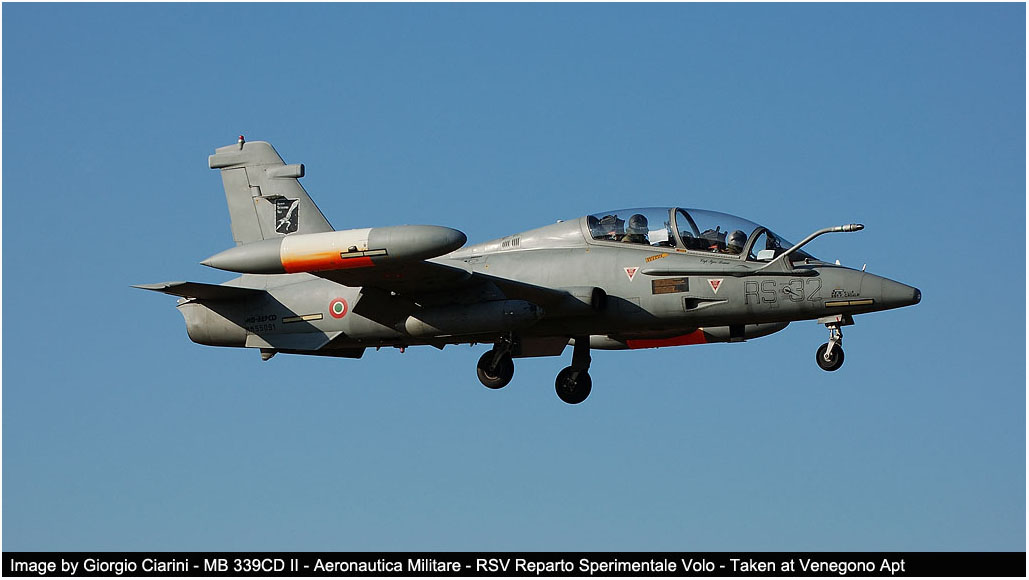 |
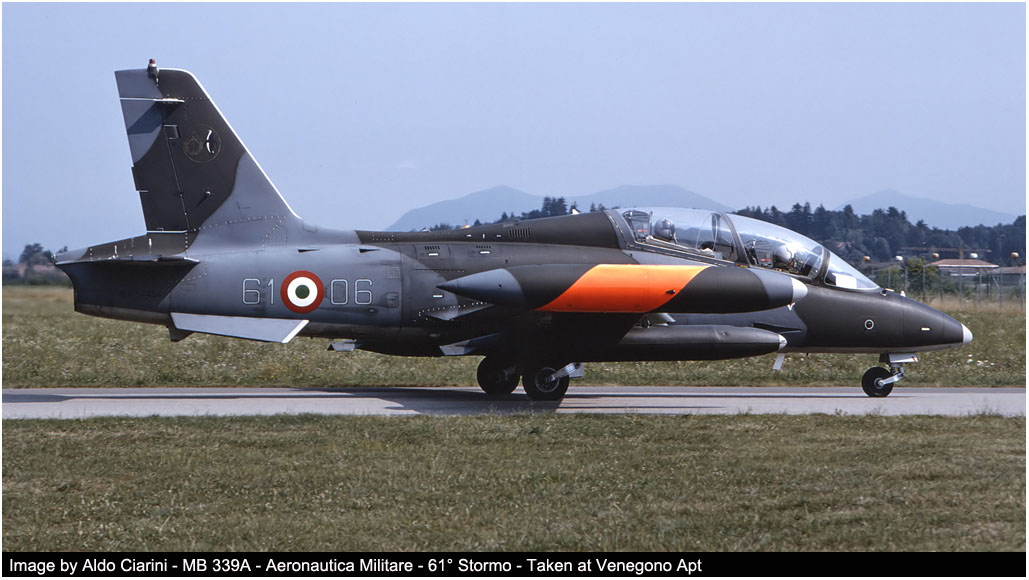
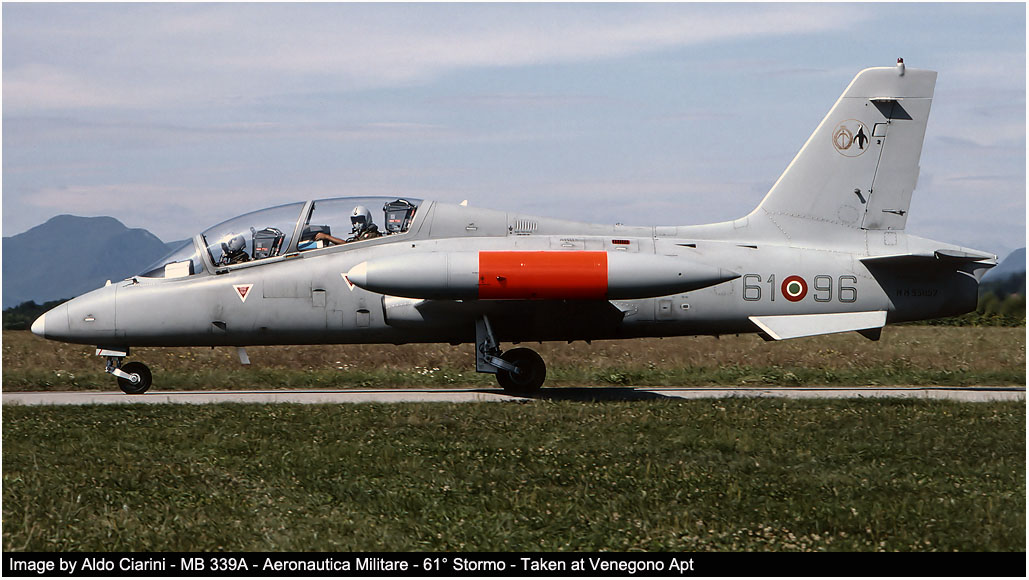
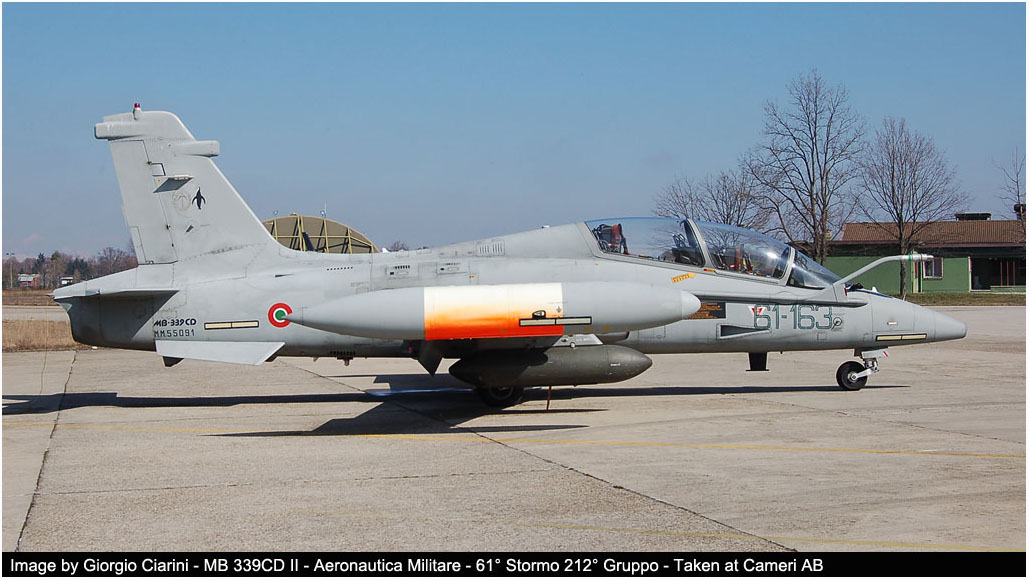
Agli inizi degli anni ’70 l’Aeronautica Militare evidenzia la necessità di un sostituto per il Macchi MB 326, per cui la ditta varesina appronta una serie di progetti, sia di nuova concezione, che di trasformazione del 326, questa seconda ipotesi è quella che viene ritenuta più idonea dall’Aeronautica Militare che nel 1975 dà così il via ad un ordine per 104 esemplari del progetto MB 339.
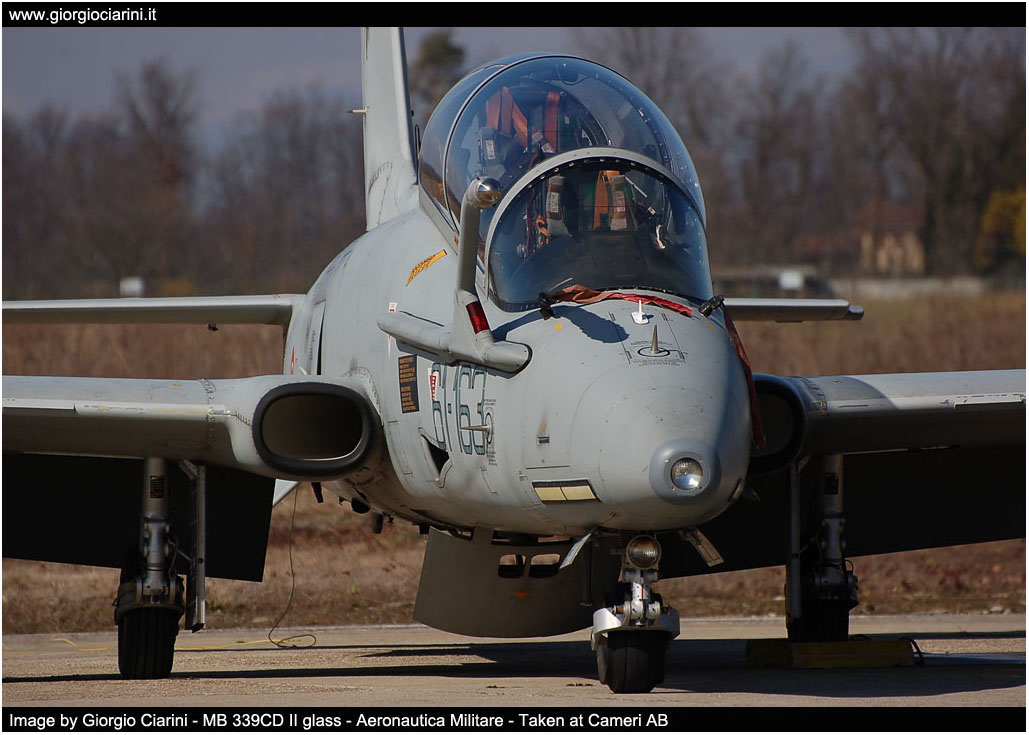
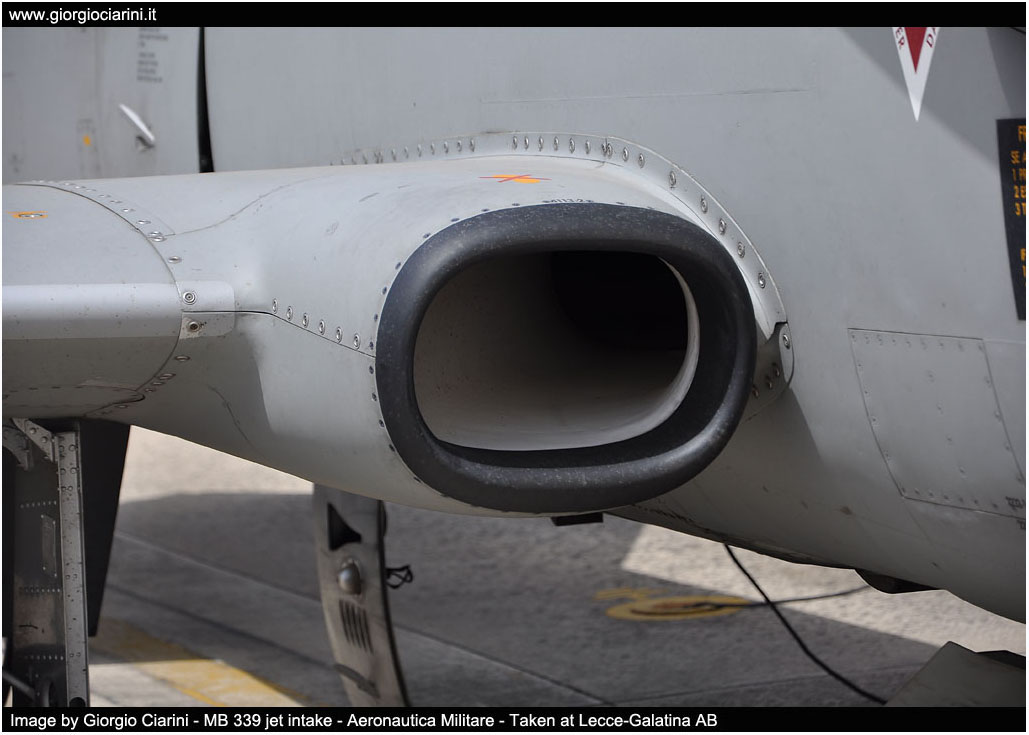
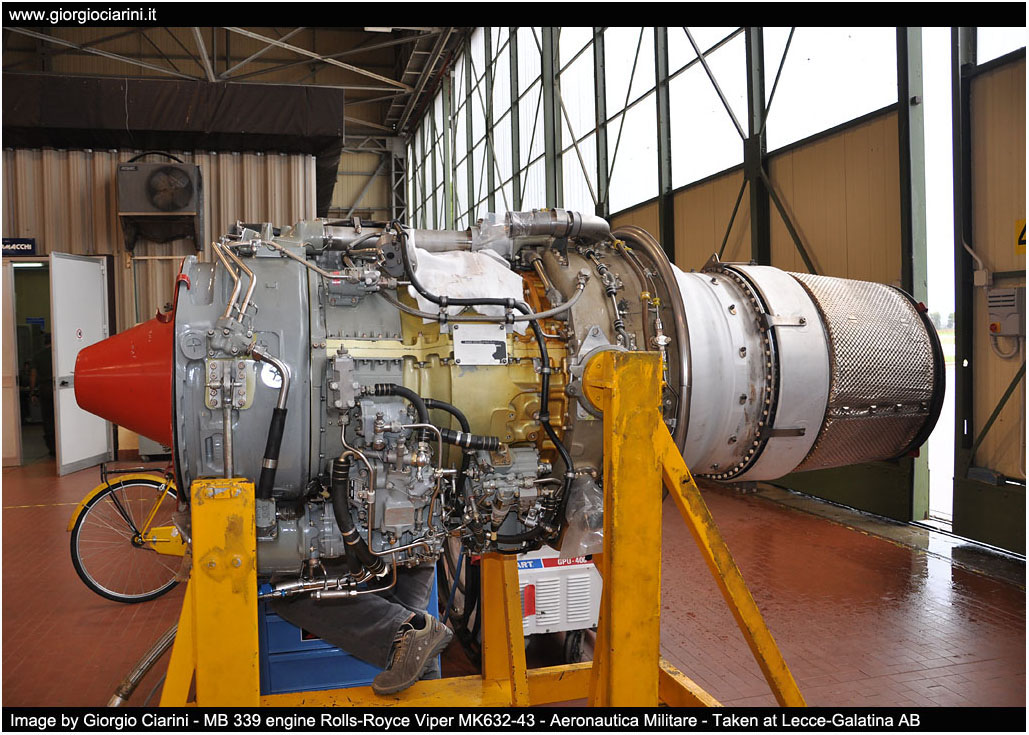
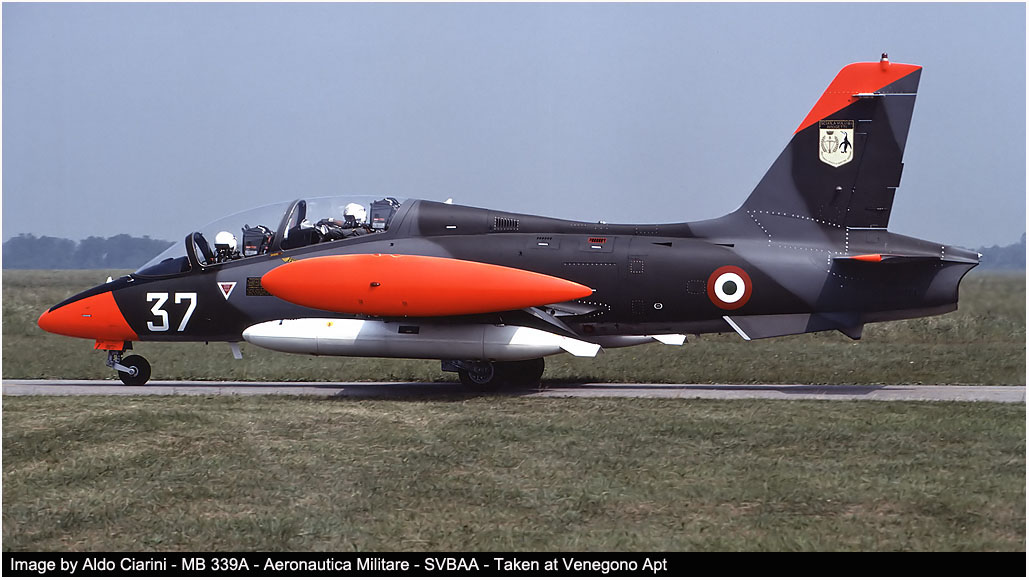
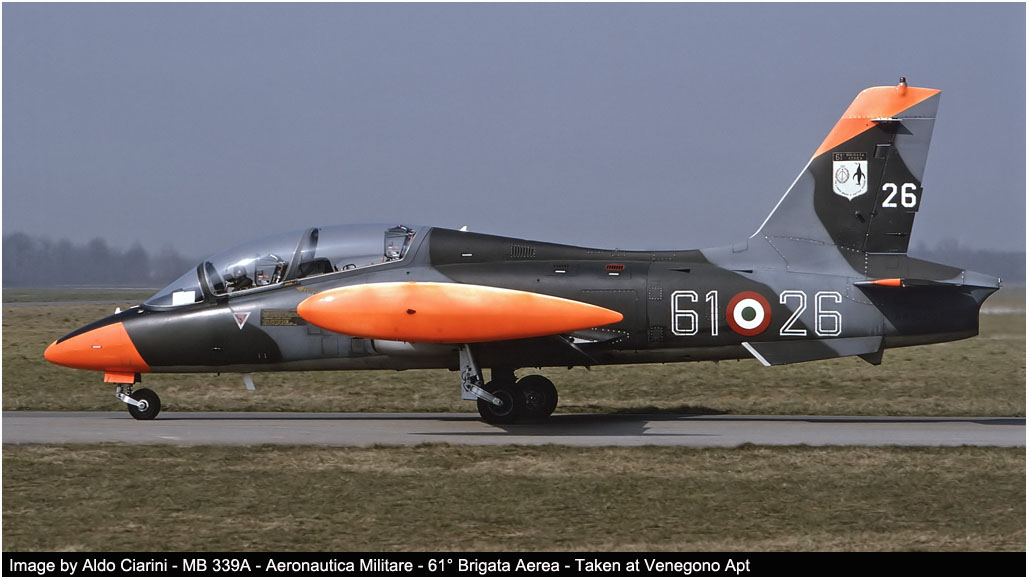
Il velivolo Aermacchi MB 339A quindi discende dal suo diretto predecessore MB 326, la nuova filosofia addestrativa introdotta in Aeronautica Militare con l’MB 326 viene traslata nelle modifiche di progetto del nuovo addestratore, è mantenuta la componente aerodinamica, ampiamente soddisfacente e collaudata del 326, lo stesso discorso per la struttura che ha già dimostrato di poter reggere sino alle 10.000 ore di volo; nuova architettura invece per la parte anteriore del velivolo con l’introduzione dei posti di pilotaggio “scalati” che garantiscono un notevole incremento di visibilità per l’istruttore dal posto posteriore, per quanto riguarda il propulsore, viene mantenuto lo stesso turbogetto utilizzato sulla versione “K” (monoposto) del 326 ovvero il Rolls Royce Viper Mk.632 ed i punti di attacco dei carichi subalari (sei in totale).
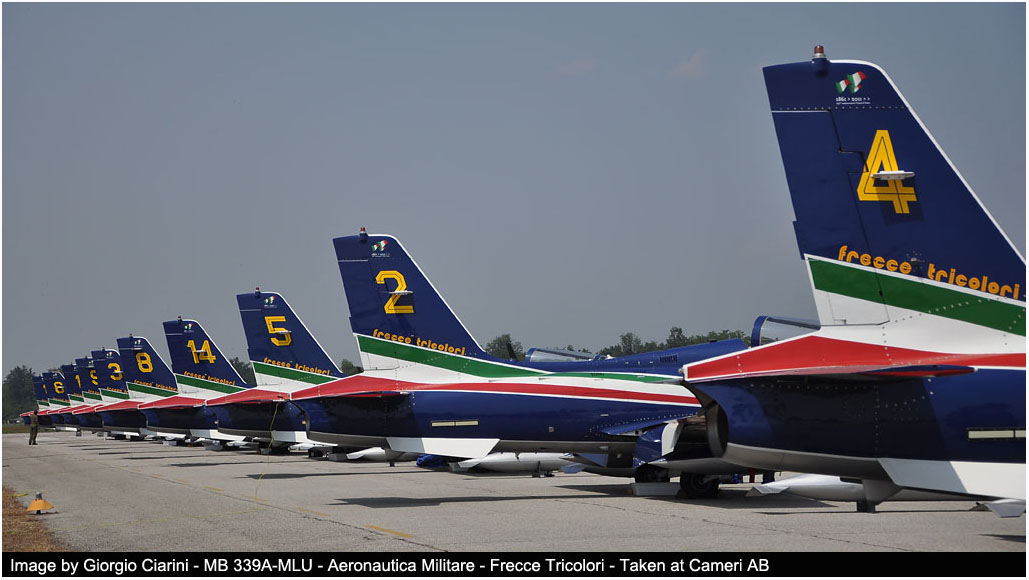
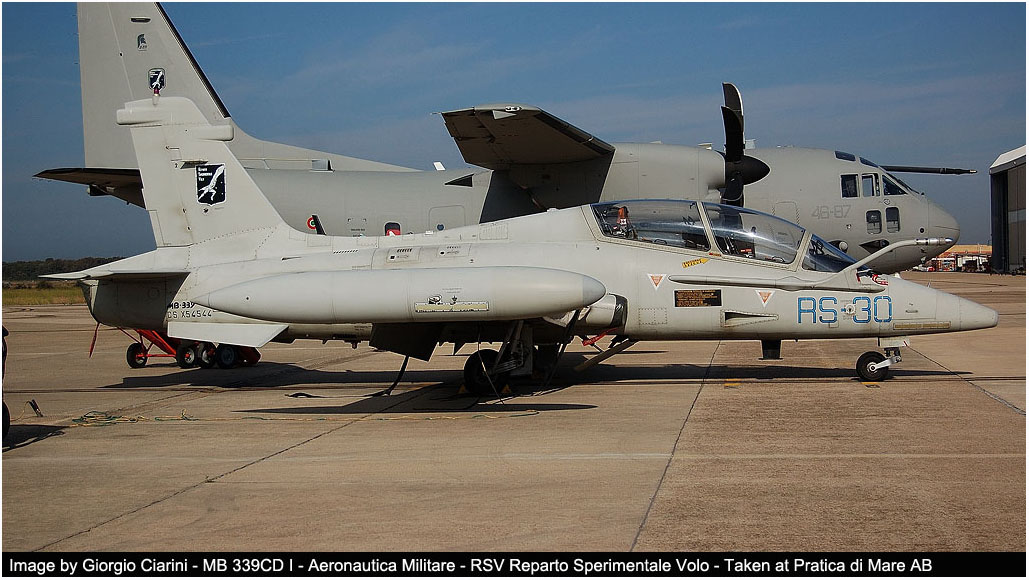
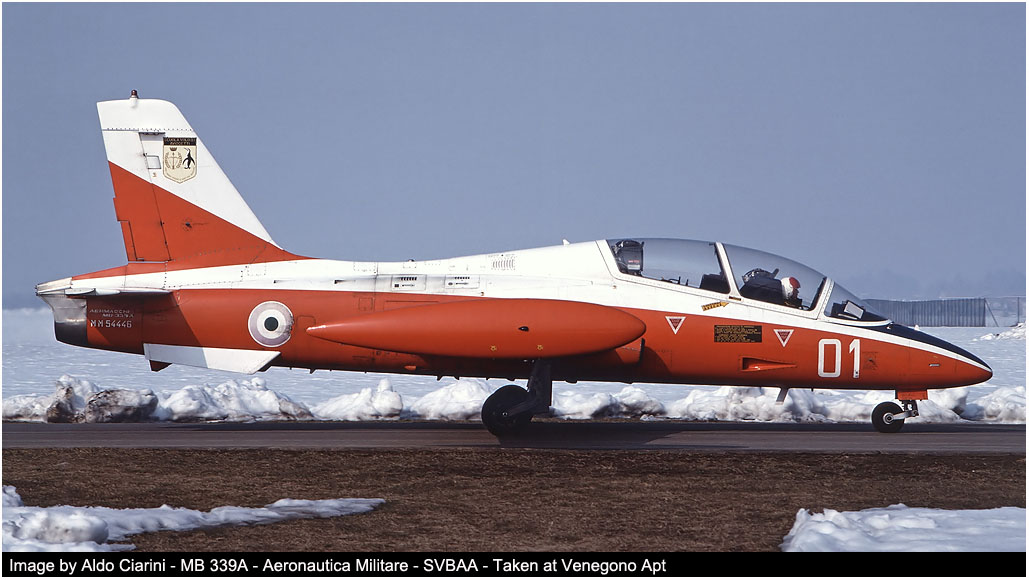
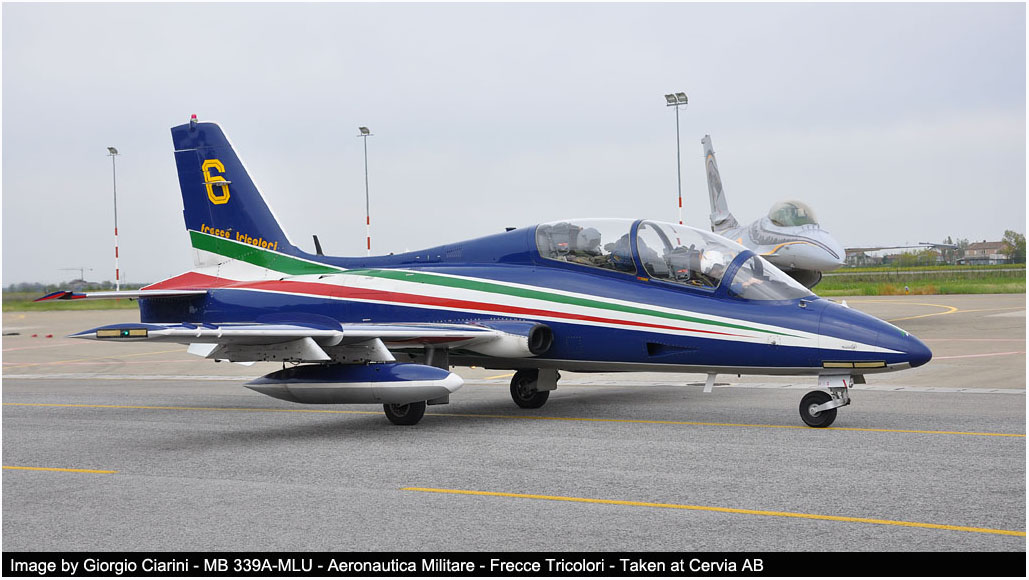
Il nuovo addestratore dell’Aermacchi effettua il primo volo nell’agosto del 1976 e le consegne alla Forza Armata iniziano nell’agosto del 1979 con quattro macchine che svolgono, presso il Reparto Sperimentale di Pratica di Mare, le prove che precedono l’ingresso nella linea operativa che ha luogo presso la Base di Galatina nell’aprile 1981; nel gennaio 1982 esce dalla linea di produzione il primo MB 339 nella versione PAN (Pattuglia Acrobatica Nazionale) e con la stagione 1982 le Frecce Tricolori passano dal Fiat G 91 al nuovo velivolo.
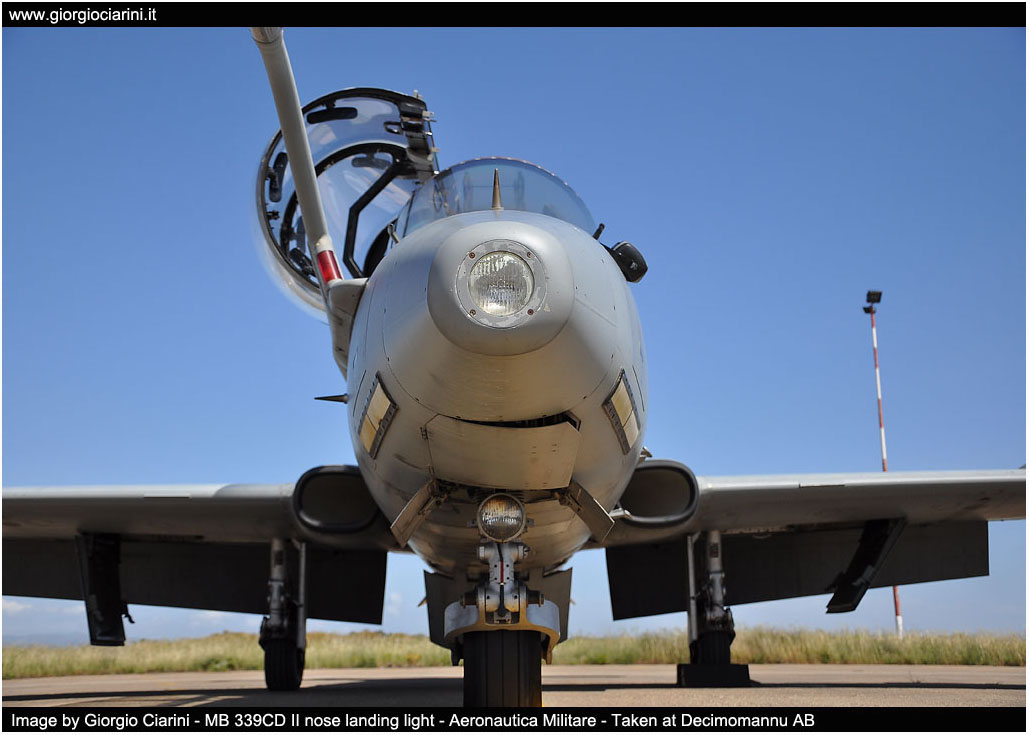
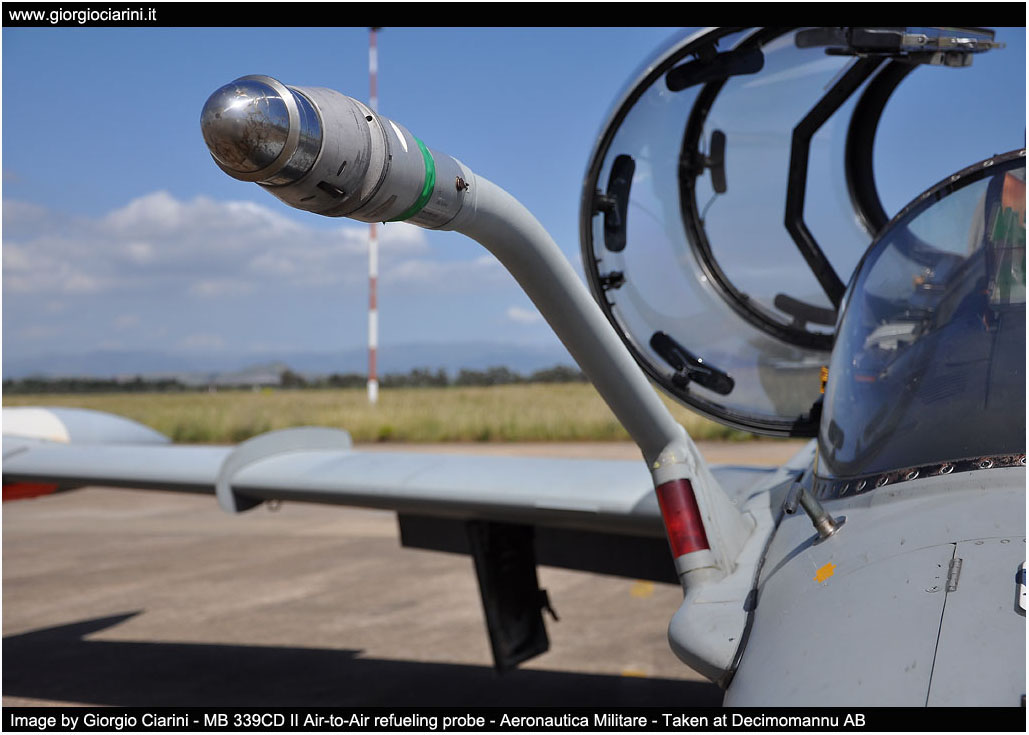
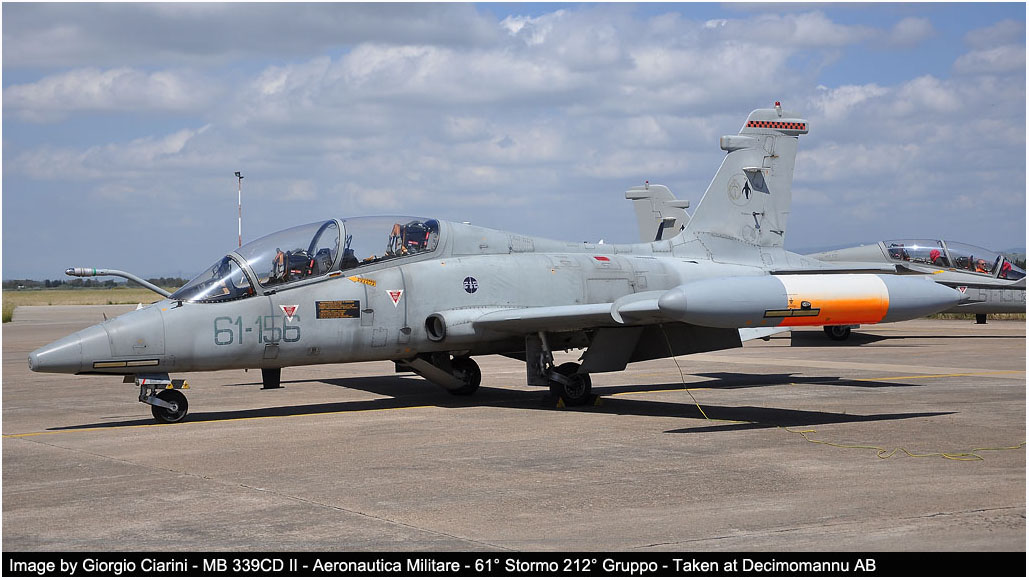
Discreto successo di esportazione (purtroppo non al medesimo livello del predecessore MB 326) con contratti per la Marina argentina, Aeronautica del Perù, Malaysia, Emirati Arabi, Ghana, Nuova Zelanda ed Eritrea; viene sviluppata anche la versione monoposto (MB 339K) che però non ha riscontro operativo, la New Zealand Air Force è la prima forza armata a commissionare 18 velivoli nella versione “avanzata” ovvero l’MB 339CB, motorizzato con il Viper Mk.680-43 da 1995 kg di spinta e fornito di avionica digitale, anche la nostra AM favorisce di questo sviluppo ed acquisisce la versione CD (Completamente Digitale) dotata anche di sonda per il rifornimento in volo, destinata a far fronte anche delle nuove tecnologie introdotte sul nuovo caccia di punta EF2000 Typhoon così da facilitarne le fasi di transizione in provenienza dall’addestramento basico.
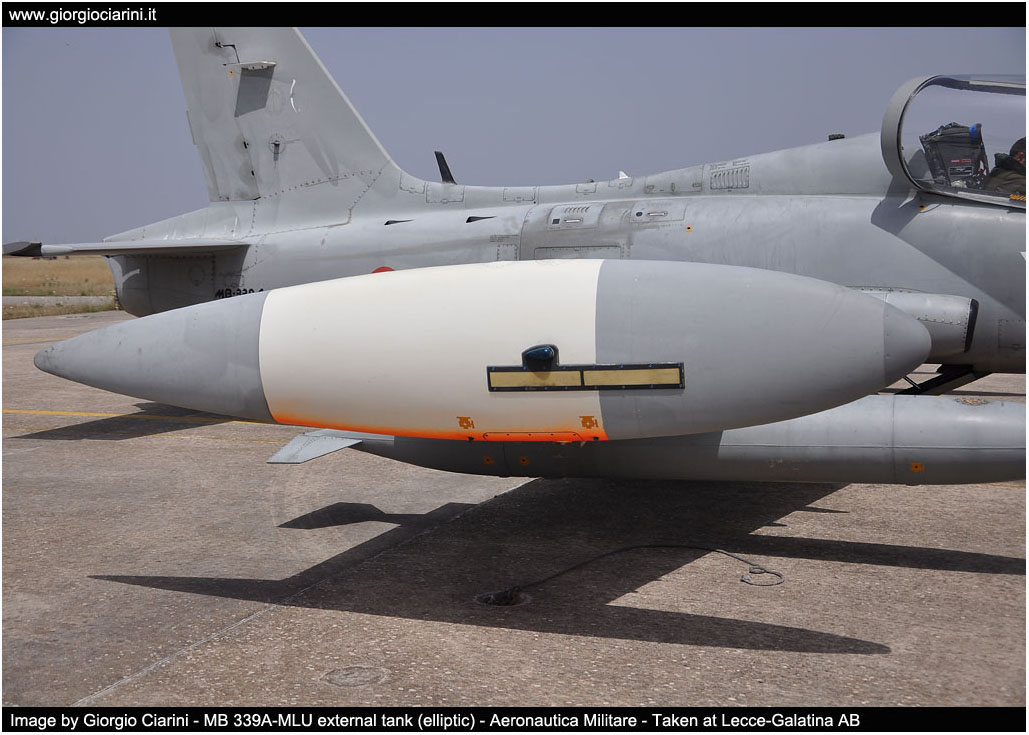
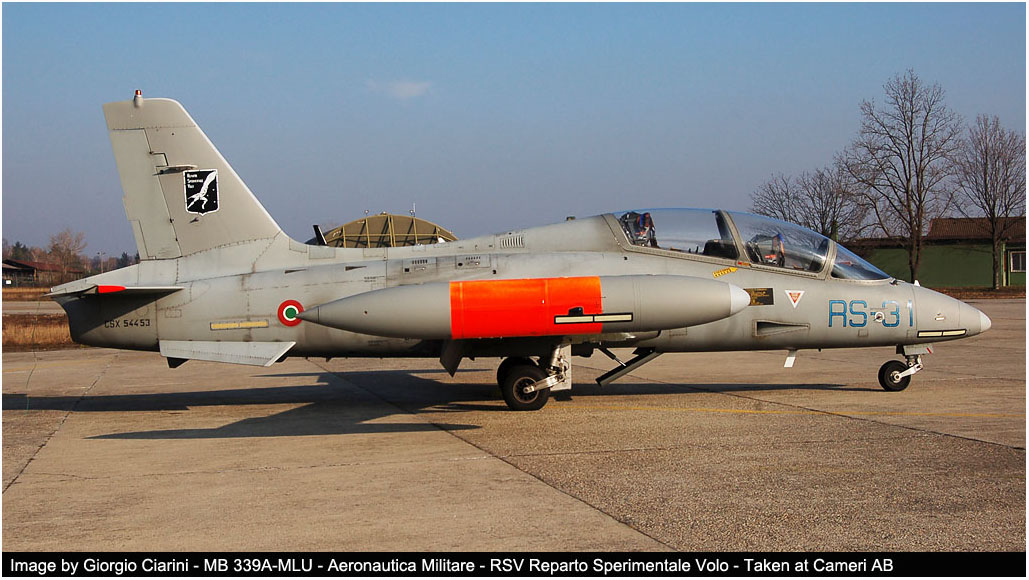
Ultimi esemplari prodotti, sono otto esemplari della versione CM alla Malaysian Air Force e consegnati nel 2009; alcune macchine provenienti dalle file dell’ AM e ritirate dall’Aermacchi sono state convertite in MB 339NAT per la Forza Aerea degli Emirati Arabi Uniti, l’acquisizione di tali velivoli, congiuntamente con i precedenti consegnati nel 1984, garantiranno un numero sufficiente per costituire una Pattuglia Acrobatica. Per estenderne la vita operativa, la flotta MB 339A/PAN dell’AM è stata recentemente sottoposta a un programma MLU (Mid-Life Update), riguardante soprattutto le apparecchiature radio e di navigazione con l’installazione del GPS. |
|
|
|
Versione T-339A (MB 339A)
Dimensioni
- Apertura alare10.858 mt (con serbatoi ellittici)
- Apertura alare11.220 mt (con serbatoi cilindrici)
- Lunghezza fusoliera 10.972 mt
- Altezza alla sommità della deriva 3.994 mt
Pesi
- Peso massimo al decollo 5.900 kg
- Capacità interna carburante 626 kg
- Capacità esterna carburante 1,333 kg
- Capacità totale carburante 1.959 kg
Prestazioni
- Velocità massima 926 km/h (0.82 Mach)
- Tangenza max 45.000 ft
- Autonomia 3.600 km (trasferimento)
- G-Limits -4G +7,3G
Impianto propulsivo
- Rolls-Royce Viper MK632-43 da 4.000 lbf di spinta
Armamento
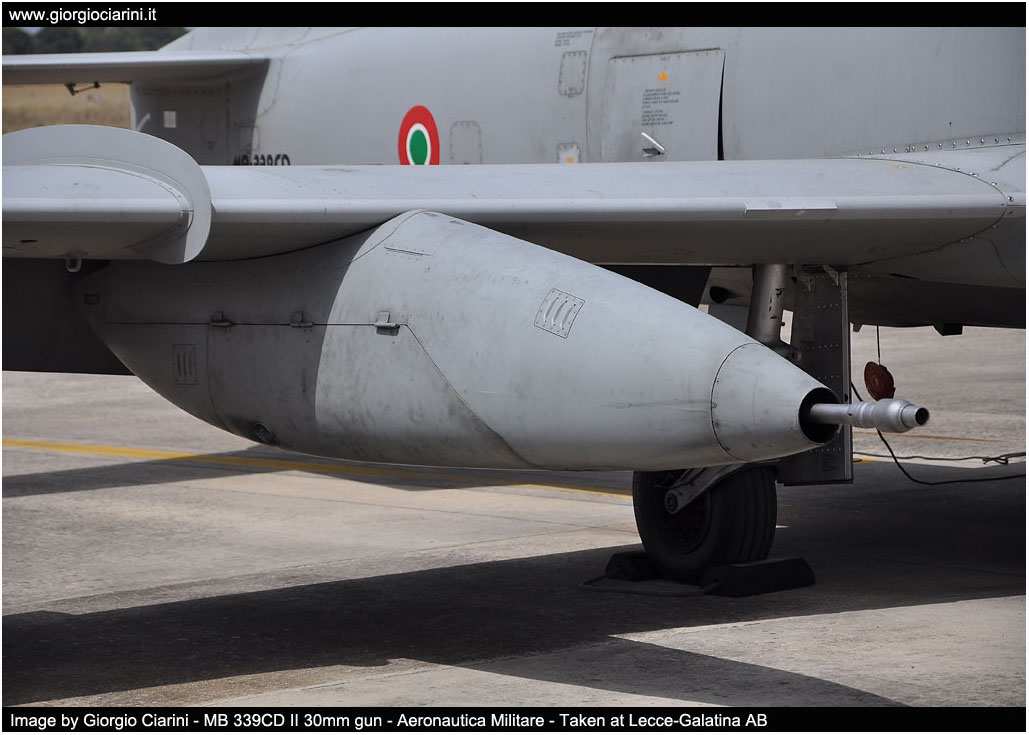
- due cannoni da 30 mm.
- due mitragliatrici da 12,7 mm.
- Bombe MK82/76
- Razziera
- Apparato collimatore
Avionica
-Sistema di indicazione assetto e direzione
-Sistema dati area
-Sistema di determinazione assistita della posizione
-TACAN, ADF, VOR/ILS
- Apparato identificazione IFF
-Radio VHF/UHF Have Quick
Equipaggio ed abitacolo
- due piloti
- due seggiolini eiettabili Martin Baker MK IT10F
Versione T-339C (MB 339CDII)
Dimensioni
- Apertura alare 11.220 mt
- Lunghezza fusoliera 11.242 mt
- Altezza alla sommità della deriva 3.994 mt
Pesi
- Peso massimo al decollo 6.350 kg
- Capacità interna carburante 626 kg
- Capacità esterna carburante 1.333 kg
- Capacità totale carburante 1.959 kg
Prestazioni
- Velocità massima 926 km/h (0.82 Mach)
- Tangenza max 45.000 feet
- Autonomia 3.600 km (trasferimento)
- G-Limits -4G +7,3G
Impianto propulsivo
- Rolls-Royce Viper MK632-43 da 4.000 lbf di spinta
Armamento
- due cannoni da 30 mm.
- due mitragliatrici da 12,7 mm.
- Bombe MK82/76
- Razziera
- ATM-9L(CAPTIVE AIM-9L Training Missile)
Avionica
- Piattaforma inerziale GPS
- Visualizzatore mappe digitali
- TACAN, ADF, VOR/ILS
- Apparato identificazione IFF
- Radio VHF/UHF Have Quick
- Crash recorder
- Sistema NVG
- Radar altimetro
- Ricevitore d'allarme radar RWR
Equipaggio ed abitacolo
- due piloti
- due schermi HUD (Head Up Display)
- due seggiolini eiettabili Martin Baker MK IT10LK
- sei display multi funzione MFD
|
Version T-339A (MB 339A)
Size
- Wingspan 10,858 m (with elliptical tanks)
- Wingspan 11,220 m (with cylindrical tanks)
- Fuselage length 10,972 m
- Height at the top of the drift 3,994 m
Weights
- Maximum take-off weight 5,900 kg
- Internal fuel capacity 626 kg
- External fuel capacity 1,333 kg
- Total fuel capacity 1,959 kg
Performance
- Maximum speed 926 km/h (0.82 Mach)
- Maximum tangency 45,000 ft
- Range 3,600 km (transfer)
- G-Limits -4G +7,3G
Propulsion system
- Rolls-Royce Viper MK632-43 4,000 lb thrust
Armament
- two 30 mm guns.
- two 12.7 mm machine guns.
- Bombe MK82/76
- Raider
- Collimator apparatus
Avionics
-Attitude and direction indication system
-Data system area
-Assisted position determination system
-TACAN, ADF, VOR/ILS
- IFF identification apparatus (Identification Friend or Foe)
-Radio VHF/UHF Have Quick
Crew and cockpit
- two pilots
- two ejection seats Martin Baker MK IT10F
Version T-339C
Size
- Wingspan 11,220 m
- Fuselage length 11,242 m
- Height at the top of the drift 3,994 m
Weights
- Maximum take-off weight 6,350 kg
- Internal fuel capacity 626 kg
- External fuel capacity 1,333 kg
- Total fuel capacity 1,959 kg
Performance
- Maximum speed 926 km/h (0.82 Mach)
- Tangency max 45,000 feet
- Range 3,600 km (transfer)
- G-Limits -4G +7,3G
Propulsion system
- Rolls-Royce Viper MK632-43 4,000 lbf thrust
Armament
- two 30 mm guns.
- two 12.7 mm machine guns.
- Bombe MK82/76
- Raider
- ATM-9L(CAPTIVE AIM-9L Training Missile)
Avionics
- GPS inertial platform
- Digital map viewer
- TACAN, ADF, VOR/ILS
- IFF identification apparatus
- Radio VHF/UHF Have Quick
- Crash recorder
- NVG
- Radar altimeter
- RWR radar alarm receiver
Crew and cockpit
- two pilots
- two HUD (Head Up Display) screens
- two ejection seats Martin Baker MK IT10LK
- six multi function MFD displays
|
|
|
|
 |
 |
 |
 |
 |
 |
 |
 |
|
English translation
At the beginning of the 70s, the Aeronautica Militare highlighted the need for a replacement for the Macchi MB 326, for which the Varese company is preparing a series of projects, both of new conception, that of transformation of MB 326, this second hypothesis is the one that is considered most suitable by the Aeronautica Militare that in 1975 gave way to an order for 104 examples of the MB 339 project.
The aircraft Aermacchi MB 339A then descends from its direct predecessor MB 326, the new training philosophy introduced in the Aeronautica Militare with the MB 326 is translated into the design changes of the new trainer, the aerodynamic component is maintained, amply satisfactory and tested of the MB 326, the same speech for the structure that has already demonstrated to be able to hold until the 10.000 hours of flight; new architecture for the front of the aircraft with the introduction of "scaled" steering positions that provide a significant increase in visibility for the instructor from the rear seat, as regards the engine, the same turbojet used on the "K" (single-seater) version of the MB 326 is maintained, namely the Rolls Royce Viper Mk.632 and the attachment points of the sub-plane loads (six in total).
The new trainer of Aermacchi makes the first flight in August 1976 and deliveries to the Armed Force begin in August 1979 with four machines that perform, at the Reparto Sperimentale (Experimental Unit) of Pratica di Mare, the tests preceding the entry into the operating line at the Lecce-Galatina base in April 1981; In January 1982 the first MB 339 in the PAN version (Pattuglia Acrobatica Nazionale or National Aerobatic Team) came off the production line and with the 1982 season the Frecce Tricolori passed from the Fiat G 91 to the new aircraft.
Moderate export success (unfortunately not at the same level as its predecessor MB 326) with contracts for the Argentine Navy, Peru Air Force, Malaysia, United Arab Emirates, Ghana, New Zealand and Eritrea; The single-seat version (MB 339K) is also developed, but it has no operational feedback, the Royal New Zealand Air Force is the first armed force to commission 18 aircraft in the "advanced" version or the MB 339CB, powered by the Viper Mk.680-43 from 1995 kg of thrust and equipped with digital avionics, our AM also favors this development and acquires the CD version (Completamente Digitale or Fully Digital) also equipped with a probe for refueling in flight, designed to cope with the new technologies introduced on the new EF 2000 Typhoon fighter to facilitate the transition phases from basic training.
Last produced, are eight examples of the CM version to the Malaysian Air Force and delivered in 2009; some machines from the AM files and withdrawn by Aermacchi have been converted into MB 339NAT for the Air Force of the United Arab Emirates, the acquisition of such aircraft, jointly with the previous delivered in 1984, will guarantee a sufficient number to constitute an Aerobatic Team. To extend its operational life, the AM MB 339A/PAN fleet has recently undergone an MLU (mid-life Update) program, mainly covering radio and navigation equipment with the installation of GPS.
|
|