|
61° Stormo
|
 |
 |
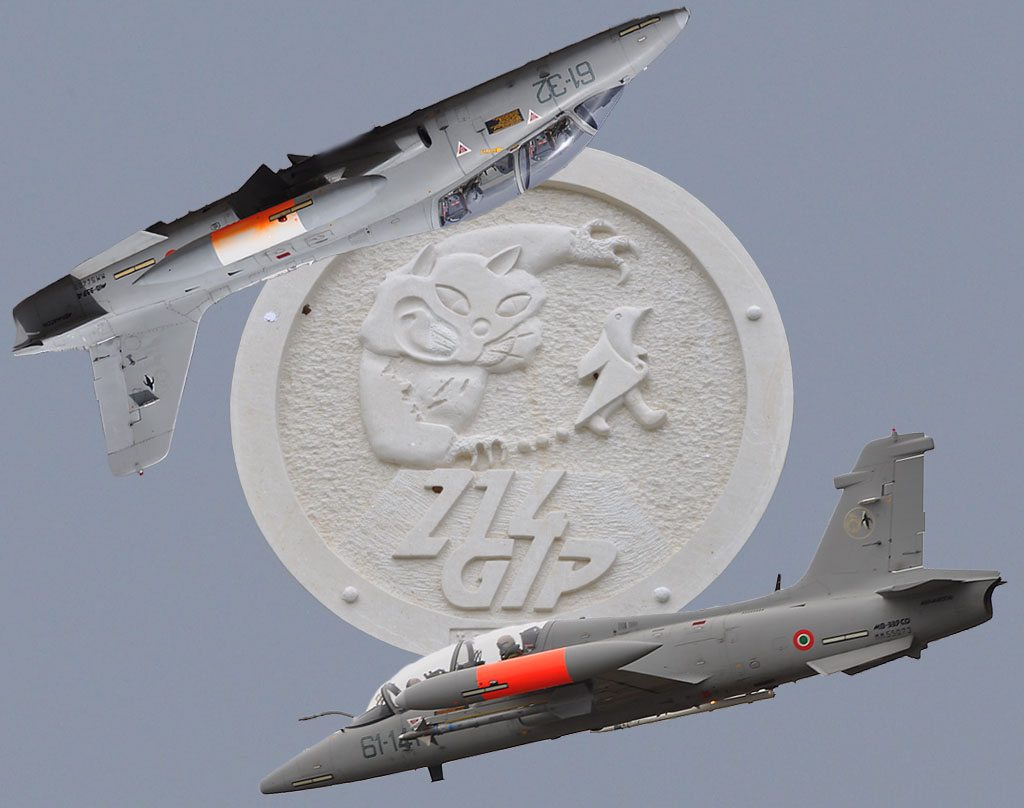
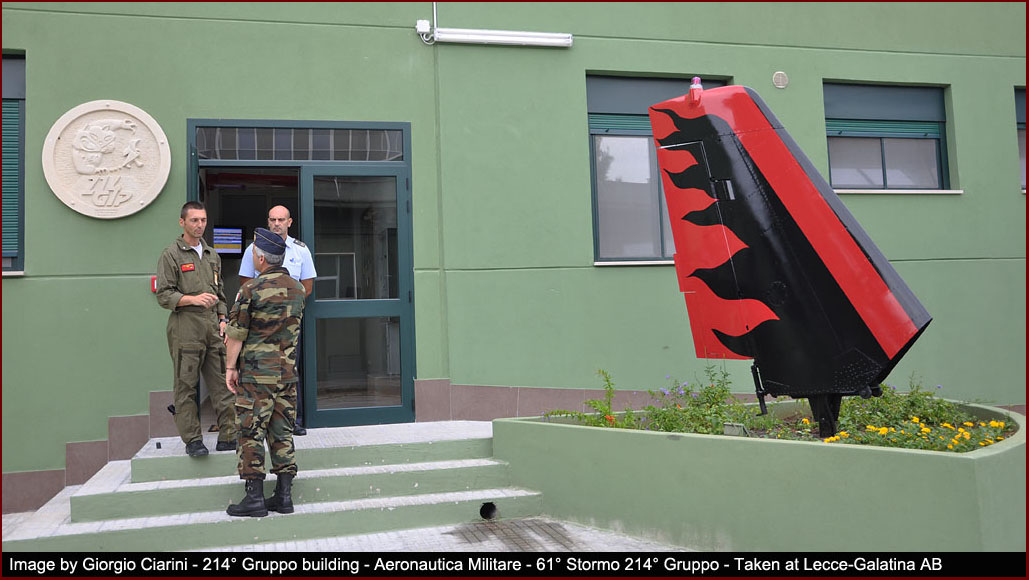
Il 214° Gruppo Aviogetti è stato costituito presso la Scuola di Volo di Lecce il 1° gennaio del 1962, sono parte integrante del reparto la 424ª e la 425ª Squadriglia, il Reparto vanta il primato di essere stato il primo Gruppo in seno alla Scuola a ricevere il nuovo addestratore Aermacchi MB 326, mentre nel 1978 il reparto viene posto in posizione “Quadro”. L’8 settembre del 1987 viene ricostituito con la denominazione e i compiti attuali.
Da come si evince leggendo il titolo ci troviamo di fronte ad un Gruppo che si occupa prevalentemente di istruzione, attività formativa rivolta a tutti i piloti che entrano a far parte del 61° Stormo in qualità di istruttori e del Comando Scuole.
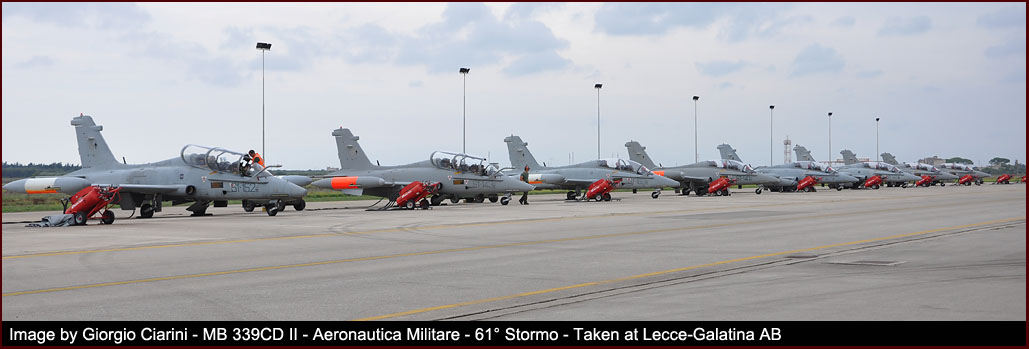
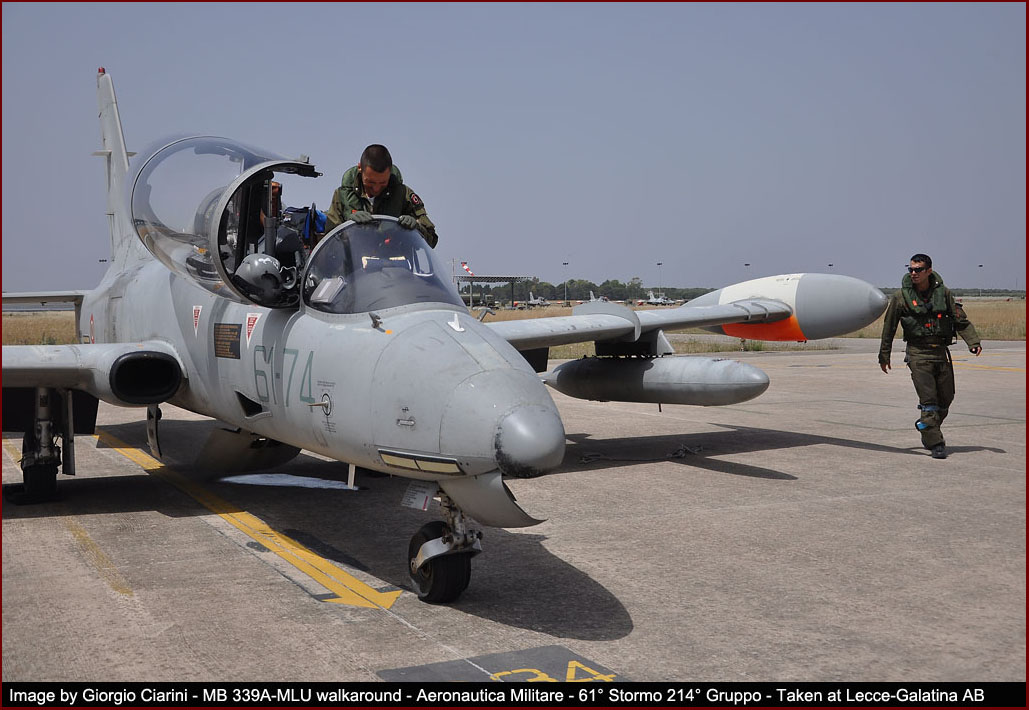
Innanzitutto mi sembra doveroso dire che il personale in carico al 214° sono tutti piloti con una peculiare esperienza alle spalle, e svolgono quotidianamente la propria attività addestrativa/operativa al pari di qualsiasi altro collega, in media un pilota rimane al GIP per un minimo di tre anni ad un massimo di cinque. Un’altra considerazione da fare prima di entrare nel merito del lavoro svolto dal reparto è che il 214° non ha alcun aereo in carico ma utilizza indistintamente i “339 Alpha” oppure i “Charlie Delta”, con questa affermazione non vorrei trarre in inganno qualcuno perché va ribadito che nessun Gruppo di Volo di Forza Armata ha in carico dei velivoli, come detto più volte sono in carico ai vari GEA, ma è pur vero che guardando la Scuola di Lecce c’è una situazione di utilizzo ben definita per gli MB 339A da parte del 213° e per l’MB 339CD del 212°; la situazione è contingente l’utilizzo specifico del velivolo, i piloti del 214° utilizzano tutte le versioni del 339 in base alle esigenze addestrative, inoltre sono abilitati come istruttori qualificati sul 339CD II per supporto a missioni basiche, mentre sul 339A forniscono supporto sia come istruttori sia come esaminatori.
Ora vediamo in ordine come è suddivisa la struttura e come istruisce i vari “allievi” che frequentano i corsi d’istruzione.
Il reparto è suddiviso in due sezioni principali: la Sezione Corsi dove si formano gli Istruttori di Volo e la Sezione Didattica dove ai frequentatori vengono impartite le lezioni di Academic e Ground School. |
 |
Mentre i corsi principali effettuati sono cosi suddivisi:
-BPM (Brevetto di Pilota Militare) dove sono svolte le seguenti attività per una frequenza pari a cinque settimane continuative:
-MTU (Maintenance Training Unit) manuale tecnico, impianti velivolo, corso macchina e sistemi basici (con supporto di istruttori del GEA)
-Procedure di emergenza.
-Aerodinamica (con supporto di Ingegneria del 10° RMV)
-Traffico aereo e meteorologia (con supporto operatori del traffico aereo)
-Medicina e psicologia (con supporto medico di Stormo)
-Fraseologia e comunicazione (con supporto operatori del traffico aereo)
-CIV (Corso Istruttore di Volo) dove vengono svolte le seguenti attività per una frequenza di circa quattro mesi e mezzo:
-Istruzione a terra, MTU accademico, medicina e psicologia
-Pratica con attività di volo
-LIFT (Lead in Fighter Training) pre-operativo dove vengono svolte le seguenti attività per una frequenza di due settimane consecutive:
-MTU macchina
-Traffico Aereo
Nel 2010 la previsione di partecipanti ai corsi di “allievi” gestiti dal 214° è prevista in 60 unità, con un notevole incremento per il corso pre-operativo LIFT, questo incremento è dato soprattutto dalla partecipazione di piloti stranieri.
Un altro compito assegnato al GIP è quello di preparare il materiale didattico informativo e di aggiornamento della manualistica.
Per ultimo la sfida che impegna maggiormente il Reparto in questi ultimi mesi, e soprattutto per il prossimo futuro, è quello dell’avvento in seno alla Scuola di una accelerazione causata dall’internazionalità acquisita, questo comporta un aumento considerevole della conoscenza da parte dei piloti istruttori della lingua inglese e della conseguente traduzione di tutta la manualistica. |
 |
|
|
|
English translation
214° Gruppo Aviogetti (Jets Squadron) was established at the Scuola Volo of Lecce on 1 January 1962. The 424ª and 425ª Squadriglia are an integral part of the Unit, the Unit boasts the record of being the first Gruppo within the School to receive the new Aermacchi MB 326 trainer, while in 1978 the Unit is placed in the "framework" position. On 8 September 1987 it was reconstituted with the current name and tasks.
As can be seen from reading the title we are faced with a Gruppo that deals mainly with education, training activities aimed at all pilots who become part of the 61° Stormo as instructors and the Comando delle Scuole.
First of all it seems right to say that the 214° employees are all pilots with a particular experience behind, and carry out their daily training/operational activities like any other colleague, on average, a pilot remains in the GIP for a minimum of three years to a maximum of five. Another consideration to make before entering into the merits of the work done by the Unit is that the 214° has not in charge aircraft but uses indistinctly the "339 Alpha" or the "Charlie Delta", with this statement I would not mislead someone because it must be reiterated that no Armed Force Gruppo di Volo has in charge of the aircraft, as mentioned several times are in charge of the various GEA, but it is true that looking at the School of Lecce there is a situation of well-defined use for the MB 339A by 213° and for the MB 339CD by 212°; the situation is contingent on the specific use of the aircraft, the pilots of the 214° use all versions of the 339 according to the training needs, are also qualified as instructors on the 339CD II for basic missions support, while on the 339A they provide support both as instructors and as examiners.
Now let us see in order how the structure is divided and how it instructs the various "students" who attend the courses of instruction.
The Unit is divided into two main Sezioni: the Sezioni Corsi (Courses Section) where the Flight Instructors are trained and the Sezioni Didattica (Didactic Section) where the students are given the lessons of Academic and Ground School .
The main courses are divided as follows:
-BPM (Brevetto di Pilota Militare) where the following activities are carried out for a frequency of five continuous weeks:
-MTU (Maintenance Training Unit) technical manual, aircraft equipment, machine course and basic systems (with GEA instructor support)
-Emergency procedures.
-Aerodynamics (with 10° RMV engineering support)
-Air traffic and meteorology (with support for air traffic operators)
-Medicine and psychology (with Stormo medical support)
-Phraseology and communication (with support for air traffic operators)
-CIV (Corso Istruttore di Volo or Flight Instructor Course) where the following activities are carried out for a frequency of about four and a half months:
-Educational on the ground, Academic MTU, Medicine and Psychology
-Practice with flying activities
-LIFT (Lead in Fighter Training) pre-operational where the following activities are carried out for a frequency of two consecutive weeks:
-MTU machine
-Air traffic
In 2010 the forecast of participants in the courses of "students" managed by the 214° is expected to be 60 units, with a significant increase for the pre-operational course LIFT, this increase is mainly due to the participation of foreign pilots.
Another task assigned to the GIP is to prepare educational materials and to update the manuals.
Last but not least, the Unit’s greatest challenge in recent months, and especially for the near future, is that of the advent within the School of an acceleration caused by the internationality acquired, this entails a considerable increase in the knowledge of English language instructors and the consequent translation of all the manuals.
|
|


